


Is your ring slipping, spinning, or threatening to fall off? It’s annoying in daily life and worrying for a precious piece. Before acting in a rush, take a few minutes to diagnose the cause and choose a solution that respects both you and your jewelry!
Signs that it’s time to head to the workshop

Before taking action, analyze and understand why your ring no longer fits properly.
What causes your finger size to fluctuate
Temperature, hydration, weight loss. In winter or after exercise, your finger volume changes. If your knuckle is prominent and the base of your finger is thinner, the ring may be difficult to put on at first, then slide once in place. Discomfort can also come from daily use and repetitive movements.
Your setting
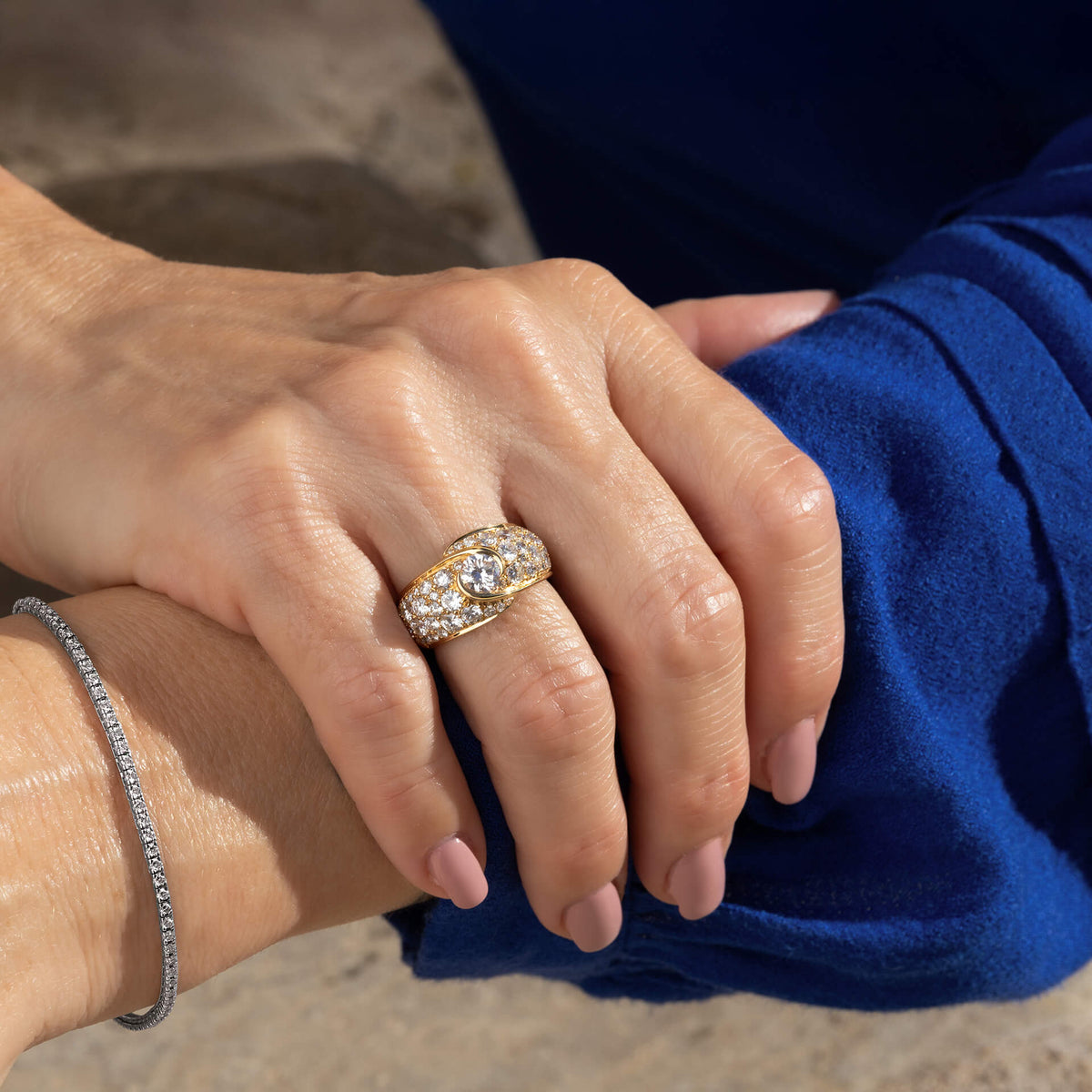
A thin band slides more easily. A wide ring accentuates any gaps, while a high setting or a heavy stone creates imbalance and encourages the ring to rotate. It is best to carefully consider these factors before making any decisions.
The quick test
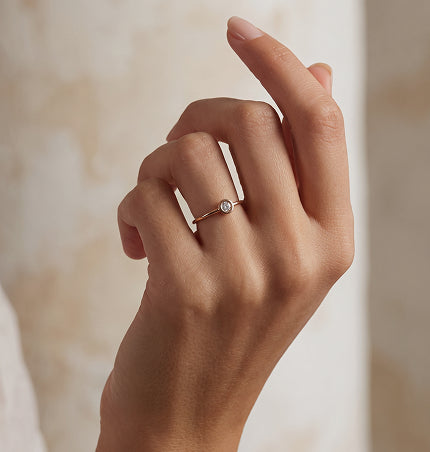
Try the ring on for several days in a row, preferably at the end of the day. The size is correct if it passes over the knuckle with slight resistance, sits well, and stays stable without compressing your finger.
Warning signs
Head to the workshop when you notice:
The ring slides off without effort or rotates while washing your hands
It is constantly crooked, with the fear of losing it
An early diagnosis avoids deformation, limits impact on the gold, and allows for a resizing adapted to both your anatomy and the structure of the setting.
Temporary and reversible solutions
When you need to secure your ring immediately, there are reversible options available. They do not replace resizing, but they offer a clean quick fix:
Silicone adjusters or spirals inside the band: quick to apply, effective on simple bands
Removable comfort inserts: useful if the knuckle is large and the base of the finger is thinner, to limit rotation
These tips are helpful, but their durability varies over time. They may be visible on certain openwork settings and prove less comfortable on very thin bands.
Use them, therefore, as a transitional step.
Resizing and adjustments
For reliable everyday wear, it is preferable to have an adjustment done in a workshop.
After measuring the gap and observing the setting, two methods are applied to 18-karat gold: removing a small section before soldering, or shrinking the ring in a controlled manner when the structure allows it.
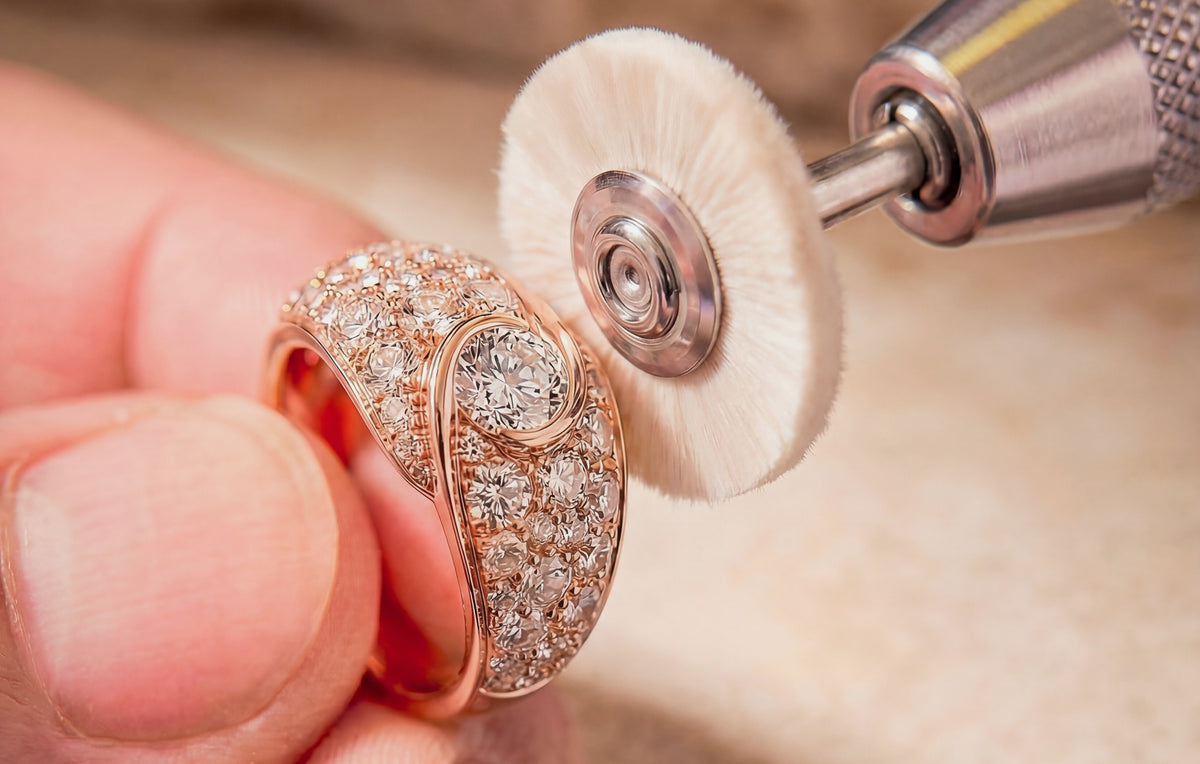
The artisan restores the round shape, polishes, cleans, and then checks the setting and stones. On a diamond ring, they also verify the tension of the prongs and the alignment. When worn, the ring stays in place without spinning, maintains its lines, and its finishes (mirror, satin, sandblasted) remain uniform with no visible marks.
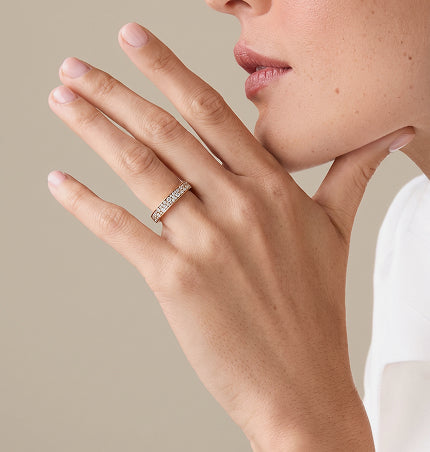
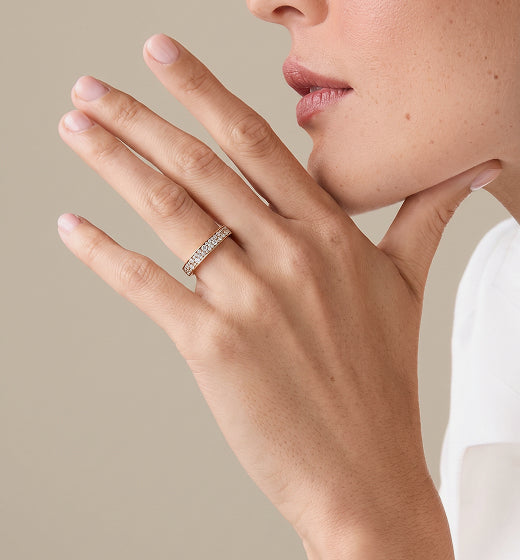
Certain pieces require precautions. On a full-pavé eternity band or a very tight setting, cutting would weaken the pavé. Two comfort beads soldered inside then reduce the size by about half a size and remain invisible on the finger.
If you wish to preserve an internal engraving, cutting is ruled out. The jeweler then prefers an internal adaptation: comfort beads or a thin sleeve adjusted inside the band to stabilize it without altering the inscription.
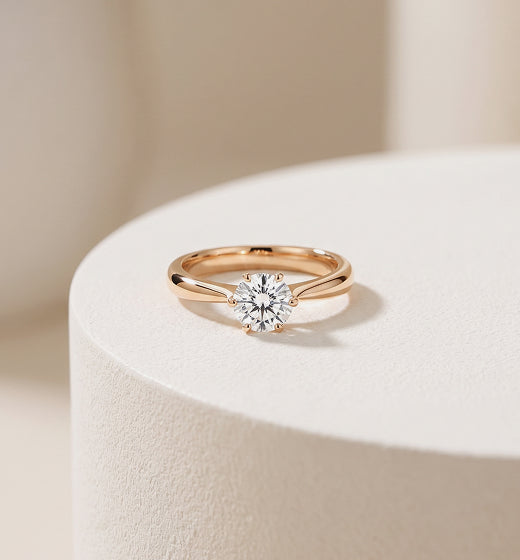
Finally, when the setting becomes unbalanced under the weight of a high setting or a large stone, a discreet internal rail or comfort beads limit rotation without tightening. On thin fingers or those with prominent knuckles, the jeweler can also slightly modify the interior shape of the ring so that it conforms better to the finger and stays perfectly in place.
Tips and maintenance advice
An 18-karat gold ring lasts through time if properly maintained. Simple steps, applied regularly, preserve its fit and luster:
Before any manual activity, remove your ring. Shocks, friction, or the pressure of a tool can deform the band and weaken the settings
Protect it from chemical damage: avoid chlorine, household cleaning products, or sudden temperature changes, which tarnish gold and stress the setting
Monitor your physique: weight loss, pregnancy, or simple hydration fluctuations can change your finger size. As soon as it spins or slips, a slight adjustment in the workshop is enough
Schedule an annual check-up: inspection of prongs, settings, and shape, plus a complete cleaning and polishing.
Don’t let your ring slip through your fingers!

A ring that spins or slips is a sign of a real fit issue. You now know how to identify the cause, how to test the size, and how to spot the warning signs in order to act before deformation or loss occurs. Regarding solutions, you have discovered temporary tips and advice, and when and why to entrust the adjustment to a professional.
Problem identified, problem solved: your ring regains its proper fit, no longer rotates, and you can wear it daily with total peace of mind.
Manipūra, a French luxury jewelry house, designs pieces crafted in 18-karat gold and set with natural diamonds, embodying exceptional craftsmanship from the French Riviera. By ensuring the precise fit of your ring, you guarantee the durability and radiance of your Manipūra piece, allowing it to fully embody the unique story and inner strength it represents.