


To measure or estimate the value of a diamond, gemologists around the world use a panel of four objective and complementary criteria whose balance helps determine the quality, rarity, and therefore the price of the precious stone.
The origin of the 4Cs of the diamond
These criteria, imposed in the 1950s by the American Gemological Institute, have since been used as the basis of analysis for all certification of valuable diamonds. They refer to carat, cut, clarity, and color.
Carat: measurement of the diamond's weight

Although carat is often confused with the size of the diamond, it is actually a measurement of weight. This has been used since antiquity, a period during which the weight of a precious stone was compared to that of a carob seed, the keration. This is, in fact, where the word comes from.
The value of a carat is historically 0.2 grams, and is explained more by the stone's density and compactness than by its size. Thus, two diamonds of the same size may very well have a different carat weight. This must be measured before setting by a certified body such as the GIA, before being appraised.
Clarity: the purity of the diamond
Even if the beauty of a diamond may seem to be a subjective measure, its clarity is actually estimated using criteria well defined by the GIA, in order to harmonize the evaluation of precious gems and allow them to be ranked.
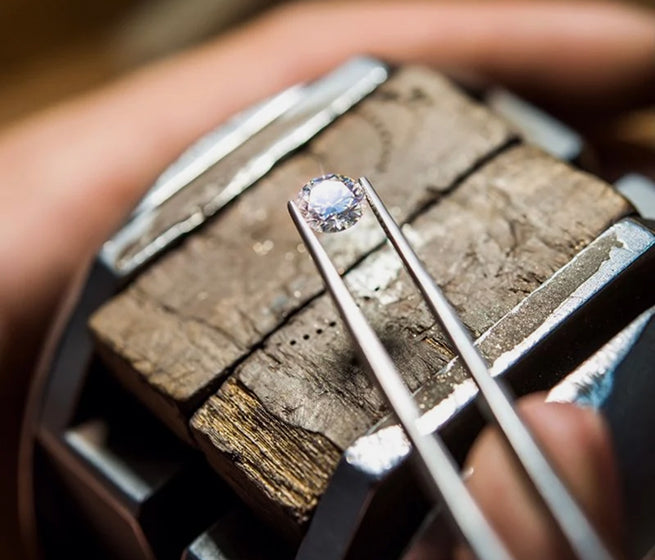
The clarity of the stone is therefore determined by a gemologist using a microscope, the standard for which requires 10x magnification. This standard also requires the neutrality of the background and the light used for the estimation.
With standard conditions met, the gemologist notes with precision the presence of inclusions in the stone or blemishes on its surface. Their report indicates their number, their size, but also their depth and, above all, their contrast.
These various parameters indeed affect the visibility of imperfections to the naked eye, and ultimately the way the diamond reflects light.
In the absence of any imperfections visible under a loupe, the diamond will be classified as Flawless; a maximum grade that gives it a very high value. If imperfections are visible to the naked eye, it will be classified as Included I1, I2, or I3. Other intermediate values exist to allow jewelers to select the best stones for their work.
Color and the different shades of diamond

While the total absence of color in a diamond is generally sought after, there are some natural shades inherited from the stone's geological history.
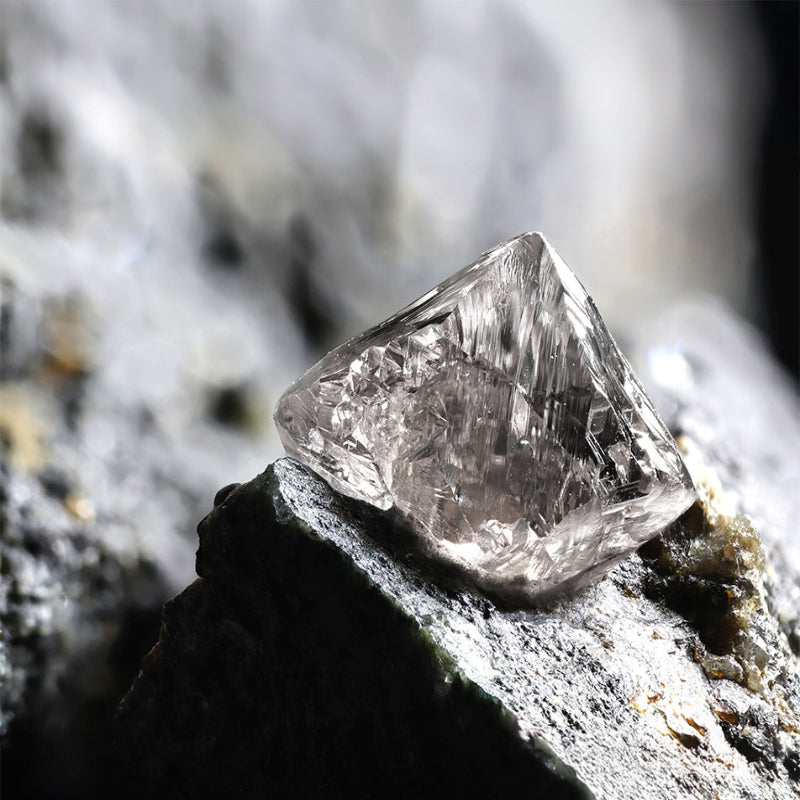
This shade varies according to the conditions of underground formation; namely pressure, temperature, and above all, the chemical environment existing prior to the crystal's formation, several thousand or even several million years before illuminating jewelers' creations.
The alphabetical color scale established by the GIA designates perfectly colorless diamonds with a D, with a gradation toward E and F. A class D diamond will be composed chemically only of carbon atoms. These are, of course, the rarest and most coveted gems.
A certain proportion of nitrogen will give the diamond a yellow to pale brown tint, while boron will color the gem with bluish reflections. Finally, depending on its concentration, hydrogen can give a gray to purplish tint to the diamond's reflections.
More exceptionally, the radiation to which the diamond may have been exposed at a very distant geological age can tint it green.
The scale continues until Z, which designates diamonds with a brown tint perfectly visible to the naked eye, without however altering its purity or value.
Certain shades are highly sought after by jewelers to harmonize with their creations or to satisfy a clientele looking for a particular nuance for their jewelry. The diamonds selected by Manipura all feature, where applicable, an exclusively natural shade, a true geological signature that makes each piece unique.
Cut: the only aspect of the diamond in the jeweler's hands
Depending entirely on the skill and experience of the jeweler, the cut of the diamond is graded from Excellent to Poor, passing through Very Good, Good, and Fair.
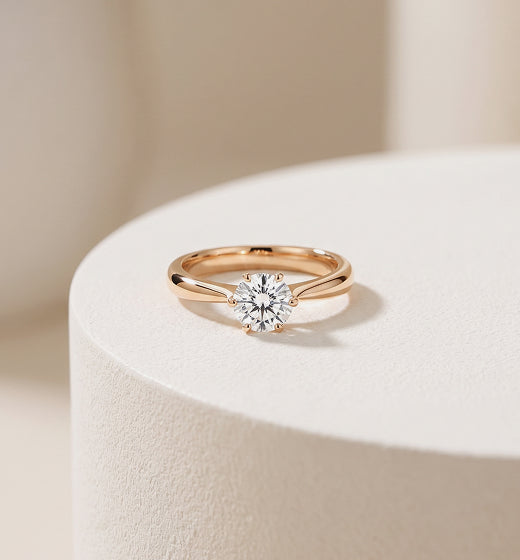
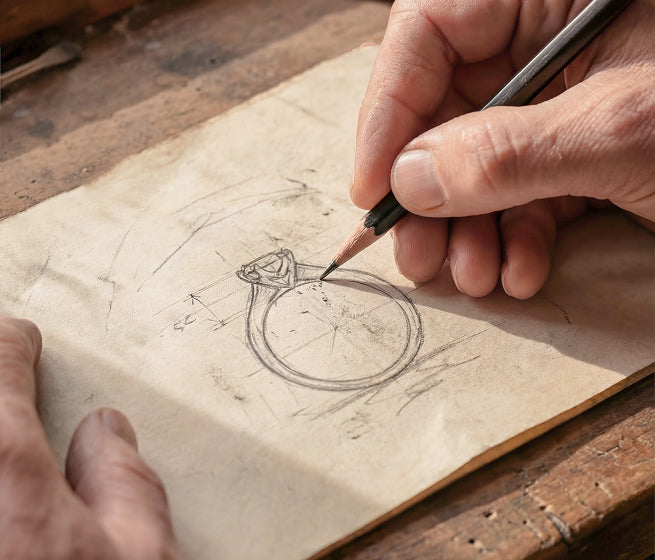
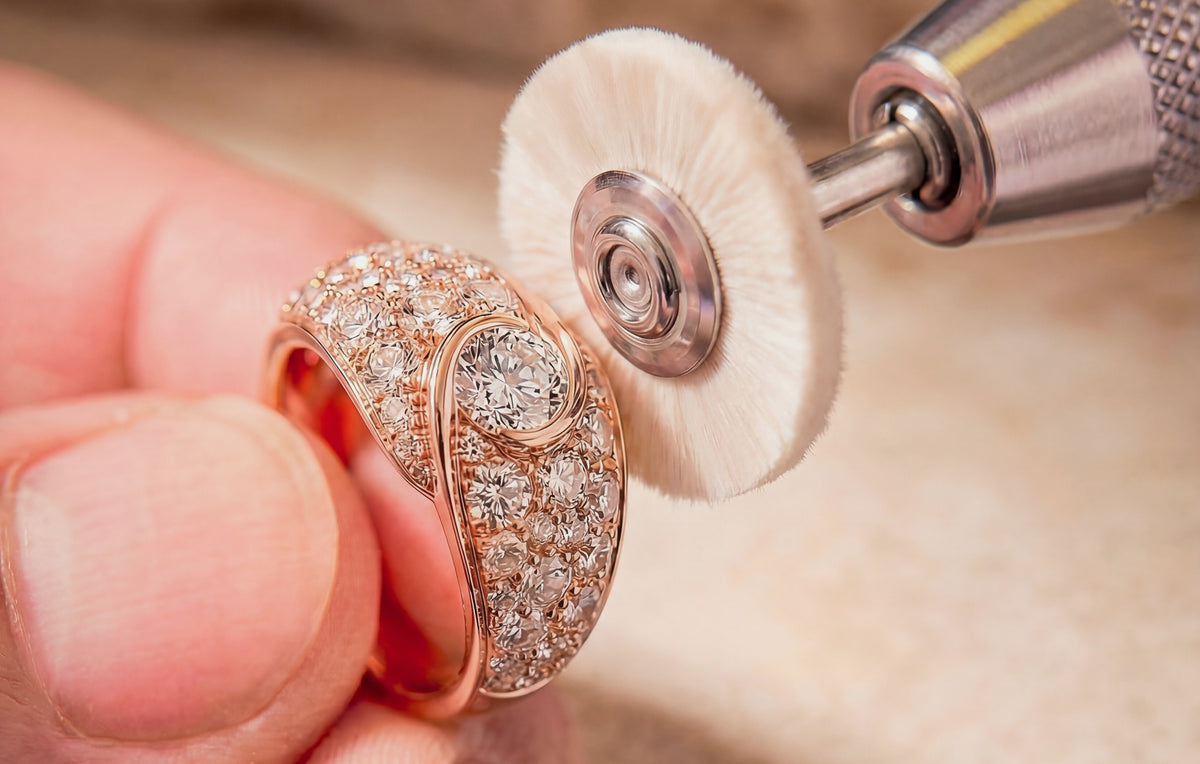
This parameter takes into consideration the geometric shape of the stone after shaping, its proportions, the symmetry of its facets, or even the quality of the polish. Diamonds can be cut according to several standards depending on the piece for which they are intended. The round brilliant cut gives it maximum sparkle and is mainly used to highlight a single diamond, as on a solitaire.
But for more complex or imposing pieces, it can be cut into an oval, square, princess, marquise, pear, or even heart shape, depending on the jeweler's fancy and the tastes of their clientele.
More than the simple aesthetic shape of the stone, the cut influences the reflection of light through the perfection of the facet angles. The ideal cut allows no light to be lost and gives the diamond unrivaled brilliance by reflecting all of it toward the person observing it. This is why Manipura selects only cuts rated "Very Good" or "Excellent" to guarantee the maximum brilliance of our creations.